HVAC · the USA
Each technician follows a fixed checklist that covers electrical, mechanical, and airflow elements. Findings are recorded on site and reviewed before the visit concludes. The same format is used across all calls so records remain consistent for repeat properties.
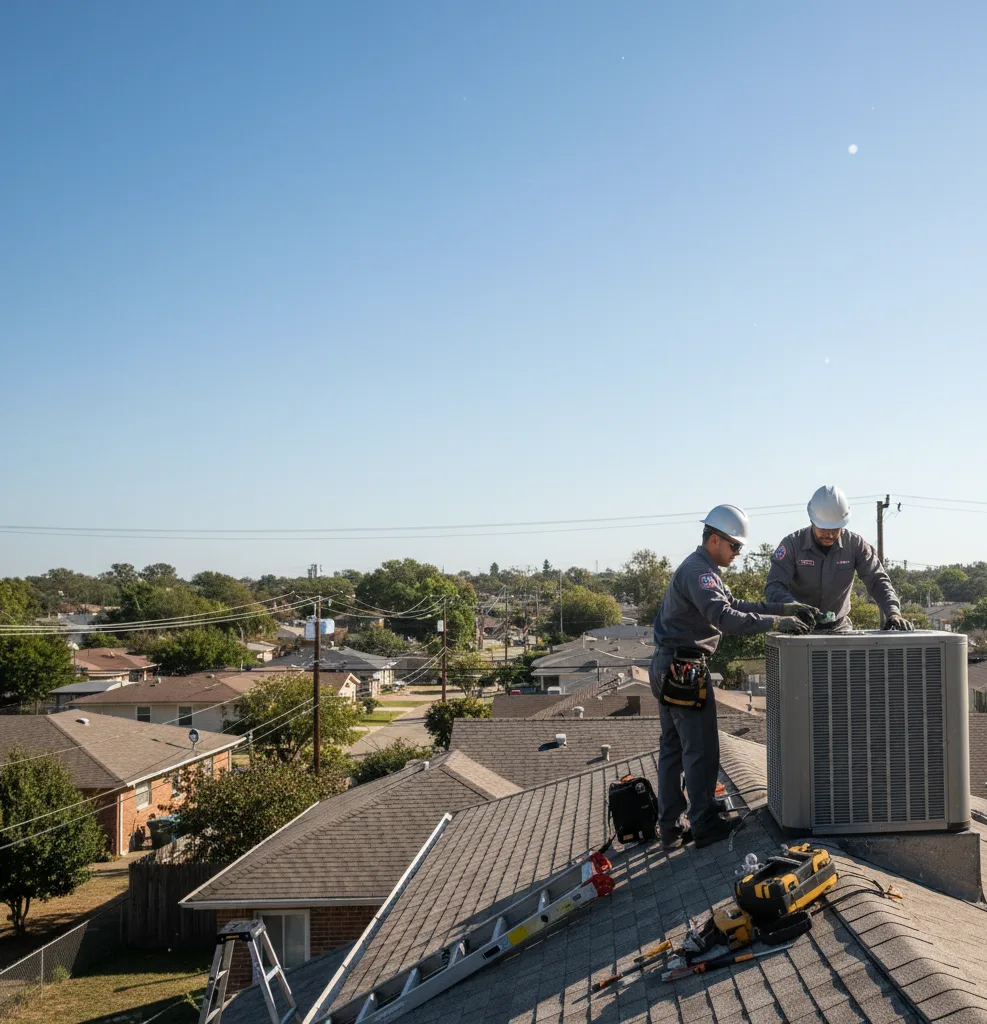
Technicians begin with the air filter and move through the blower assembly, checking belt tension and motor amperage. Evaporator and condenser coils are examined for dirt buildup that restricts airflow. Electrical terminals are inspected for corrosion or loose connections that could interrupt power to the compressor or fan. Refrigerant pressures are measured against manufacturer specifications, and any deviation is noted. Condensate drains are cleared to prevent water backup, and safety switches are tested to confirm they operate correctly. These steps are performed in sequence so that each part is evaluated in its normal operating state rather than in isolation.
Low refrigerant levels frequently trace back to small leaks at flare fittings or valve cores that air conditioning repair often addresses. Worn contactors show pitting on the surface after several seasons of cycling. Capacitors lose capacitance over time, which can be measured directly with a meter. Dirty coils are the most common observation and are documented with photos when the restriction is significant. Homeowners can sometimes notice reduced airflow at registers or longer run times before the thermostat is satisfied, both of which align with the items recorded during the visit. A furnace repair visit may reveal similar electrical wear.
FAQ

Confirm that the thermostat is set to the correct mode and that the filter is not clogged. A tripped breaker or a full condensate pan can also stop the system from running. These items are easy to verify and may resolve the issue without a service call.
Compare the cost of the repair with the age of the equipment and its current efficiency rating. A technician can provide the model year and note any other components that are nearing the end of their service life. This information helps weigh the short-term fix against the cost of a new installation.
Replacing a disposable filter on a monthly schedule is the most common task homeowners handle. Keeping the outdoor unit clear of leaves and debris also helps airflow. Any work involving refrigerant or electrical components should be left to a licensed technician.